Introduction
Learning how to train a dog to walk beside a stroller without pulling or lunging takes patience, consistency, and careful management. A dog that normally walks well on a leash may behave differently when a stroller is introduced. The wheels, movement, unfamiliar shape, and reduced space around the handler can make an ordinary walk much more stimulating.
The goal is not simply to make your dog stay next to the stroller. You want your dog to understand that walking beside it is a normal, rewarding experience. With gradual exposure and positive reinforcement, most dogs can learn to maintain a comfortable position, respond to cues, and remain composed around pedestrians, cyclists, other dogs, and unexpected distractions.
Before beginning, make sure your dog’s equipment fits correctly and that there are no obvious physical or behavioural problems affecting walking. Following appropriate Veterinary Standards of Care can also help you make responsible decisions about your dog’s wellbeing while developing a new routine.
Why Dogs Pull or Lunge Beside a Stroller
Understanding the reason behind the behaviour makes training much easier. Pulling does not necessarily mean a dog is stubborn, while lunging is not always a sign of aggression.
The stroller is unfamiliar
A stroller changes the appearance and movement of your normal walking setup. Some dogs become curious about the wheels, frame, sounds, or objects moving inside it. Others may initially regard the stroller as something unusual that needs investigation.
Movement creates excitement
Rolling wheels can trigger chasing behaviour in dogs with a strong interest in movement. A stroller also changes pace differently from a person walking alone, particularly when stopping, turning, or navigating uneven ground.

The dog feels restricted
Your dog may feel that the stroller takes up part of the space it previously had beside you. If the leash is constantly tight, the dog may become frustrated because it cannot move toward interesting smells or investigate its surroundings.
Environmental distractions add pressure
Busy pavements, traffic, children, bicycles, unfamiliar dogs, and loud noises can make stroller walks challenging. If too many distractions appear before your dog has learned the basic skill, pulling and lunging can become stronger.
Prepare Before the First Real Walk
Good preparation is one of the most important parts of learning how to train a dog to walk beside a stroller.
Choose a comfortable, properly fitted harness or collar and a standard leash that gives you enough control without creating unnecessary tension. Avoid relying on harsh corrections. Your equipment should help you communicate with your dog rather than frighten or physically punish it.
Make the stroller part of the dog’s normal environment before taking it outside. Leave it stationary in a familiar room and allow your dog to investigate it at its own pace. Reward calm behaviour around the stroller.
You can then move the empty stroller a short distance while your dog watches. Keep sessions brief. If your dog becomes highly excited, increase the distance and reduce the movement.
The principle is simple: calm behaviour should make the stroller predictable and rewarding rather than exciting or threatening.
Teach Loose-Leash Walking First
A dog should have a reasonable understanding of loose-leash walking before you expect it to walk safely beside a moving stroller.
Start somewhere quiet with minimal distractions. Reward your dog when it walks near you with a relaxed leash. You do not need to demand a perfect heel. A comfortable walking position is usually more practical for everyday stroller walks.
Reward the position you want
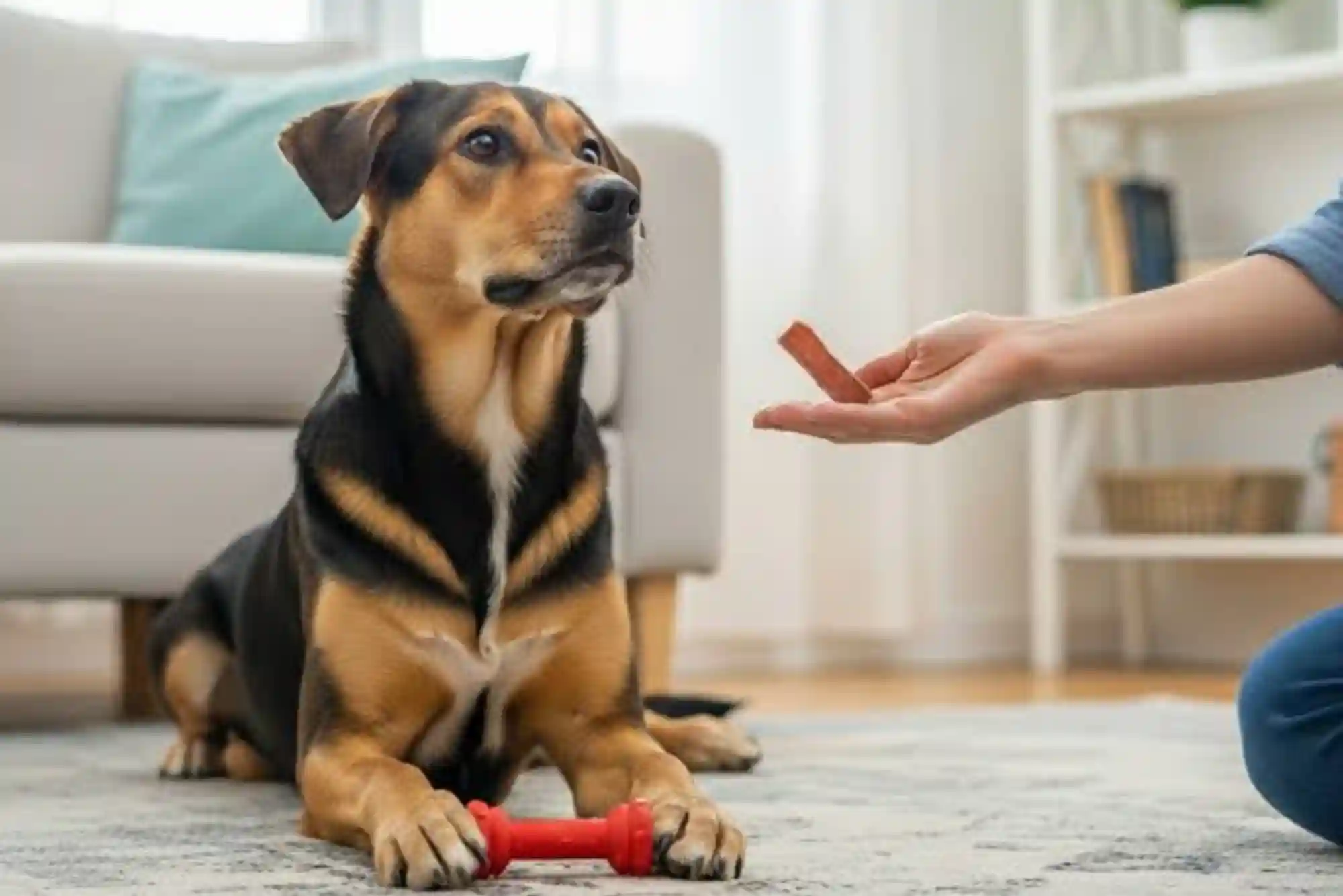
Carry small, high-value treats and reward your dog while it is walking calmly in the preferred position. Initially, reward frequently.
As your dog begins to understand the exercise, gradually increase the number of steps between rewards. This teaches the dog that remaining calm and close to you is worthwhile even when food is not delivered every few seconds.
Use a consistent verbal cue
Choose one simple cue such as “with me” or “easy.” Say it calmly before your dog begins moving away. When the dog responds by returning toward the desired position, reward it.
Avoid repeating the cue continuously. If you say the same command ten times while your dog ignores it, the word can lose its meaning.
Introduce the Stroller Gradually
Once loose-leash walking is reliable, introduce the stroller in controlled stages.
Begin by standing beside the stationary stroller. Reward your dog for looking at it calmly. Next, walk a few steps with the stroller while keeping plenty of space between your dog and the wheels.
When your dog remains relaxed, gradually increase the distance and duration.
If your dog pulls toward the stroller, stop rather than allowing the pulling to move the stroller forward. Wait for the leash to loosen, encourage the dog back into position, and then continue.
This teaches an important lesson: pulling does not make the walk progress, while calm walking does.
How to Train a Dog to Walk Beside a Stroller Safely
The most effective approach is to build the skill in stages rather than expecting your dog to master it during a busy outdoor walk.
Start in a quiet location
A driveway, quiet garden path, empty park area, or similarly controlled environment can be easier than a crowded pavement. Your dog can concentrate on the stroller without simultaneously processing dozens of distractions.
Walk short distances and make gentle turns. Reward your dog whenever it maintains a loose leash and stays in the appropriate area.
Practise stopping and starting
A stroller walk involves frequent changes of pace. Practise stopping, standing still, and moving forward again.
When you stop the stroller, ask your dog to remain calm instead of immediately moving ahead. When you start again, reward the dog for returning to its walking position.
These exercises are particularly useful around crossings, entrances, lifts, and crowded areas.
Practise turns
Sudden turns can cause a dog to cross in front of the stroller or move toward its wheels. Practise wide, predictable turns initially.
As your dog improves, introduce tighter turns and changes of direction. Keep your movements controlled and give your dog enough time to respond.
Prevent Pulling Before It Becomes a Habit
Prevention is easier than repeatedly correcting established behaviour.
Watch your dog’s body language. If you notice the dog becoming intensely focused on another dog, person, bicycle, or moving object, increase your distance before the dog reaches the point of lunging.
You can then redirect the dog toward you and reward calm attention.
Do not wait until the leash is fully tight and your dog is already barking or lunging. At that point, the dog may be too emotionally aroused to learn effectively.
This is one reason short training sessions are often more productive than long, stressful walks.
What to Do When Your Dog Lunges
If your dog suddenly lunges while walking beside the stroller, safety comes first.
Keep the stroller stationary if possible and create distance from the trigger. Avoid jerking the leash or attempting to physically drag the dog past the distraction.
Once your dog is calmer, redirect its attention and reward a relaxed response.
If lunging happens repeatedly around particular triggers, temporarily choose quieter walking routes. Training should occur at a difficulty level your dog can handle successfully.
If the behaviour appears aggressive, is escalating, or creates a genuine safety concern, seek help from a qualified reward-based trainer or veterinary behaviour professional.
Build Reliable Attention Around Distractions
A dog that can look at you when something interesting happens is much easier to manage beside a stroller.
Practise attention exercises away from the stroller first. Say your dog’s name once, reward it for looking toward you, and gradually practise around mild distractions.
Later, incorporate the stroller.
For example, your dog might notice a person approaching. Before it starts pulling, use your attention cue. When the dog looks toward you and maintains a loose leash, reward it.
Over time, the dog learns that checking in with you is more valuable than automatically charging toward every distraction.
Choose the Right Walking Environment
Your surroundings have a major influence on success. A quiet route may be ideal during the early stages of training.
As your dog improves, gradually introduce more challenging environments. You might progress from a quiet residential street to a less busy park and eventually to busier public areas.
This gradual progression prevents the dog from being overwhelmed.
It is also worth considering the stroller itself. Make sure wheels, brakes, and other components are functioning properly before walking with your dog. The person handling the stroller should always be able to maintain control of both the stroller and leash.
For broader guidance and dog-related educational resources, Gccleadership provides additional material that can complement responsible pet-care planning.
Common Mistakes to Avoid
One common mistake is moving too quickly. Owners sometimes introduce a stroller indoors one day and expect a perfect busy-city walk the next. Dogs learn through repetition, and each new environment adds difficulty.
Another mistake is rewarding only perfect behaviour. Your dog should receive reinforcement for small improvements, such as choosing not to pull for several steps or calmly watching another dog pass.
Avoid holding the leash extremely short throughout the entire walk. Constant tension can make some dogs more frustrated and reactive.
It is also important not to punish growling, barking, or other warning signals without addressing the underlying trigger. Suppressing communication does not necessarily resolve the emotional response causing the behaviour.
For additional guidance on safe walking practices, owners can also consult AKC Stroller Walking Guidelines and compare those recommendations with their dog’s individual needs.
Create a Consistent Training Routine
Consistency matters more than marathon training sessions. Five to ten focused minutes can be more productive than an hour of repeated pulling and frustration.
Use the same walking cue, reward calm behaviour consistently, and keep expectations realistic. If one person allows the dog to drag the stroller while another insists on loose-leash walking, progress will be slower.
Pay attention to improvement rather than perfection. A dog that previously lunged at every moving object but now calmly watches most distractions has made meaningful progress.
As the behaviour becomes reliable, gradually reduce food rewards and replace some of them with praise, sniffing opportunities, or permission to explore. The ultimate objective is for calm stroller walking to become an ordinary part of your dog’s routine.
When Professional Help Is Appropriate
Some dogs need more support than basic leash training can provide.
Consider professional assistance if your dog repeatedly lunges at people or animals, redirects aggression toward the handler, escapes equipment, becomes uncontrollably fearful, or cannot settle even at a substantial distance from triggers.
A qualified professional can identify whether the behaviour is driven primarily by excitement, frustration, fear, anxiety, or another factor and create an appropriate behaviour-modification plan.
A veterinary professional can also help rule out physical discomfort that might be contributing to unusual behaviour.
Make Stroller Walking a Calm Habit
Learning how to train a dog to walk beside a stroller without pulling or lunging is less about controlling every movement and more about teaching your dog what behaviour works. Start with loose-leash skills, introduce the stroller gradually, reward calm walking, and increase distractions only when your dog is ready.
Most importantly, prioritise safety over speed. A successful stroller walk is one where your dog remains relaxed, the leash stays manageable, and you can comfortably control your surroundings.
Start with a few minutes in a quiet location today. Build the habit slowly, reward the behaviour you want, and give your dog time to become confident around the stroller. With consistent practice, calm walking can become a natural part of your daily routine.
FAQs
How do I get my dog to stop pulling while walking?
Start in a low-distraction environment and reward your dog whenever the leash remains loose. When pulling occurs, stop rather than allowing the dog to move forward through leash tension. Resume walking once the dog returns to a calmer position.
How do I train my dog to walk beside me instead of pulling?
Teach the dog that staying near you produces rewards and forward movement. Begin with a few calm steps, reward frequently, and gradually increase the distance between rewards. Practise before adding difficult distractions such as a stroller.
How do I stop my dog from lunging on walks?
Identify your dog’s triggers and maintain enough distance to prevent the dog from becoming overwhelmed. Reward calm observation and attention toward you. If lunging is severe or unpredictable, work with a qualified behaviour professional.
Is it safe to walk a dog next to a stroller?
It can be safe when the dog is appropriately trained, the leash and equipment are secure, and the handler can control both the dog and stroller. Start in quiet surroundings and gradually introduce distractions.
Why does my dog pull toward other dogs when walking?
Pulling toward other dogs can result from excitement, frustration, fear, or a desire to interact. The safest response depends on the underlying motivation. Creating distance and rewarding calm behaviour can help, while severe reactions may require professional guidance.
How long does it take to teach a dog to walk nicely on a leash?
There is no universal timeframe. Age, temperament, previous training, environment, and the reason for pulling all influence progress. Consistent short sessions usually produce better results than occasional intensive training.
Related Reading: نصائح للحفاظ على الجمال والأناقة في الحياة اليومية — full guide
Related Reading: Best Heavy Duty No-Pull Harnesses for Pitbulls, Boxers, and Strong Pullers
Related Reading: Feline Hyperthyroidism: Weight Loss with Increased Appetite Symptoms and Treatment
Related Reading: Can Dogs Eat Apples, Bananas, and Carrots? Fiber Benefits and Choking Hazard Prevention